Both. You set up the signals and logic using this panel, plus a few other screens to get them working. The panel also will update as the railroad is run, so it’ll be showing live on the panel what the RR is doing. Plus I’ll have the optional CTC panel with a model board showing occupancy and other info.

cutting open turnouts is not possible within this system?
If the crew obeys the signals then they should not be able to run a turnout thrown against them.
Therein lies the rub with the key word being “if” .
This is where you will really miss Ken (outside) with Andy inside over your shoulder!
Signals set up from Burke to the entrance to Dead Rooster Gulch. This is as far as I can go now, since the trackwork at DRG will change sometime this year.

Now to start building the wiring harnesses for the signals.
First signal wired. This will be signal L174, the dwarf signal with the red indication in the above diagram at Node FF/174
I’ve standardized on 7 pin IP68 waterproof aviation connectors for all the signals. The other end of this harness will go to the node itself, but I wont be able to figure out the wiring for that until I can get to the layout.

I’m hoping that you are planning on securing the cables to the underside of the layout. If I was a chipmunk or a squirrel and they were hanging down that would look like lunch or perhaps boredom time to me.
Besides it would just down right piss ya’ off if they gnawed on them after all this work! They have banged my hardwired landscape cabling a few times but it was just enough over the years to wage a war that I still have not won!
So far, nothing has eaten all the lighting or 120v or DCC wiring, so I’m hoping this wire insulation isnt made out of soy. But then there’s always metal sheath I can put on. 
I am enjoying following this thread, Bob. But, geez, I wish I knew your railroad. It would make following along much easier!
Me too John me to !
Perhaps one of these days real soon.
Car and loco detection. The typical way to do this is to detect a current draw across the rails, without causing a dead short. This is done by adding a resistor across the wheels, in the 3.3k to 10k ohm range. I found some conductive glue that works well, and I only need one big drop of it on each wheel set to complete the circuit. The resistor body and wires themselves will get epoxied to the axle for protection.
The glue:

Note the dark grey globber on the back of the wheel.

And, 10k, like its supposed to be:

1 Like
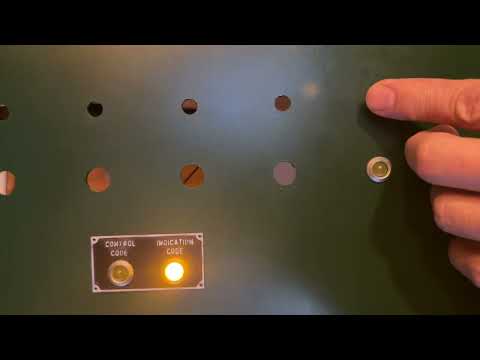
Fiddling with some non-essential stuff on the CTC panel today. There are two indicators on a CTC panel, Control Code and Indication Code. These are to show that “a code button has been pressed and I’m sending” and “What you told me to do via the code button has been complete.” Well, simplified, anyway. Took me a bit of fiddling in JMRI to get them to work like I wanted.
I am so there when it’s finished.
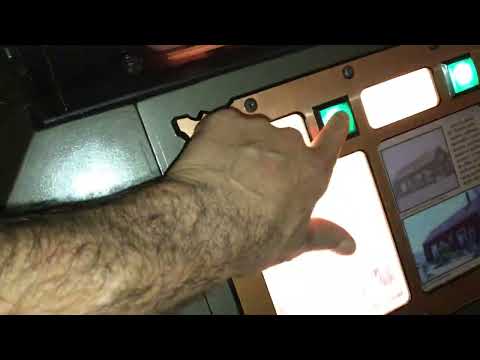
Cliff was gracious enough to allow me to try his buttons before his Comstock display left the building. You can hear him in the background telling the history.
1 Like
Well you are pretty good at pushing my buttons….
1 Like
Bob,
That seems like a simple solution to getting a resistor connection. I want to eventually set up a low voltage detection circuit for grade crossing signals.
1 Like
Yea. LS is a lot of steel wheels which don’t lend themselves to be soldered so this was a good solution.
1 Like
When you did that I thought to myself “Geez I’m sure glad I got the arcade style buttons…” 
1 Like

With all this snow you should consider incandescent bulbs instead of LEDs. Then when you get buried next year just turn on all the lights and melt the snow!