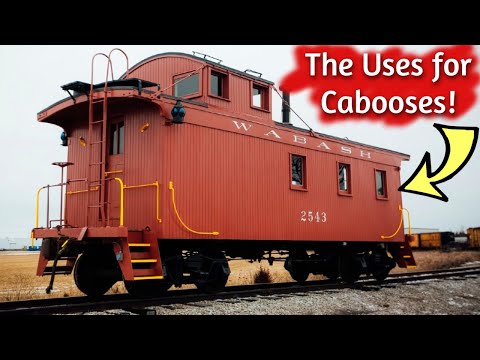
i just can’t stand it.
i’ll have to ask. many of these cabeese and drover cabooses have handrails on the roof, on both sides of the cupola.
but how did people get from one side of a cupola to the other side??
i just can’t stand it.
i’ll have to ask. many of these cabeese and drover cabooses have handrails on the roof, on both sides of the cupola.
but how did people get from one side of a cupola to the other side??
Korm;
Not even sure if there was any thought given to getting around the cupola! Even standard cabooses lacked a way around the cupola, although some rare examples had planks over the cupola similar to a brakeman’s walkway. Without trying to read too much into things, my guess is that, “Well, you can always descend to the end platform and walk through the car.” was the prevailing logic.
Best, David Meashey
Prolly where LGB got their idea for the model they came up with.
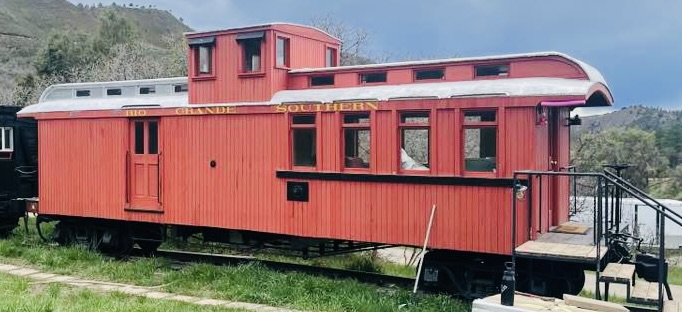
There are often grab rails on the cupola roof. I suspect that anything taller would get taken off in tunnels.
Korm, That is what the windows are for. 
rim shot
that would be hard to believe.
because then the question would be, why did they build walkways and handrails, if people would/should go through the car?
but no footholds…
hmmm - really?
It was prolly OSHA’s first rule. If you are going to be on top of a caboose, grab irons are required.


FWIW, here’s a description of the drover caboose purpose.
https://www.trains.com/trn/train-basics/ask-trains/drovers-caboose/
Maybe the tall handrails on the roof were to accommodate more lookouts than the cupola could handle, that is, drovers who wanted to keep a closer eye on their stock cars ahead. The cupola was likely not available to the drovers anyway, who were kept in a separate room from the train crew.
thank you.
in absence of a more satisfying explanation, i will settle for this.
Wasn’t that an antenna