You probably mean a Morris Minor
Kinda’ demonstrates minimal concern for operator safety and comfort. Based on where it may be located, probably not the quarry owner’s concern. Does remind me of the very earliest locomotives that had a footplate, but no cab.
Regards. David Meashey
I was thinking a Bedford, with the bonnet & central speedo, but on closer look - that’s a complete guess as the grill isn’t right…
Cheers
N
Here’s a fun loco near me (at the moment), stowed at the Canterbury Railway Society in Christchurch NZ.

Cliff;
Interesting locomotive, geared, I suppose. Drive shaft along the frame centerline like a Heisler, Dunkirk, or Climax I am guessing? How close am I to being correct?
Best, David Meashey
1 Like
It’s an A & G Price loco, Cb113 is the makers ID. Dave is bang on the $$. 
Taken from the book “Prices of Thames” by Bob Stott (1983):


1 Like
This came across my feed today…


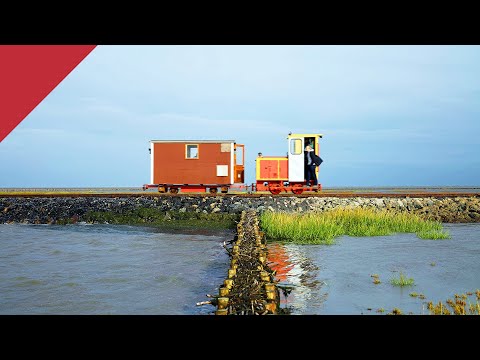
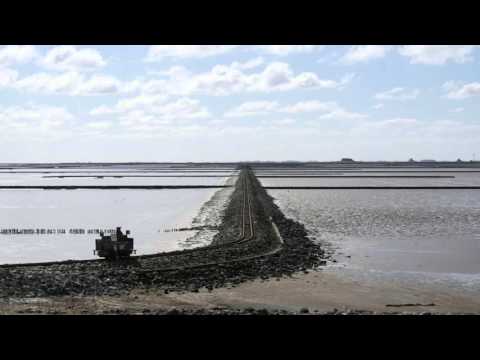
The Lorenbahn is probably one of the quirkiest little railways in Europe. Running just three and a half kilometres across the tidal flats of the North Frisian Wadden Sea, it links the mainland sea dike at Lüttmoorsiel with the tiny Hallig island of Nordstrandischmoor.
The line was built in 1933 to support dike construction and maintenance, but today it provides the island’s twenty or so residents with their only direct access to the mainland. What makes it extraordinary is that each resident owns a small rail vehicle, called a Loren.
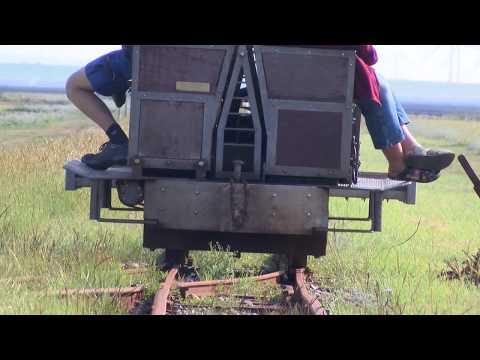
These Loren come in many forms. Some are little more than open wagons with a motor attached, while others are enclosed cabins on narrow-gauge chassis, painted brightly or fitted with seats, lights, and storage. In earlier days, a few even carried sails to catch the sea wind. All share the same single track and if two Loren meet head-on, one must reverse or pull aside.
Travel on the Lorenbahn also requires attention to the sea itself. Unlike a raised bridge, the causeway sits low across the mudflats and is at the mercy of the tides. Journeys have to be timed carefully, because at high tide or during storms the track may be submerged.
It remains one of the very few places in Europe where a railway functions as a substitute for a public road.
Here’s the link
3 Likes
That’s pretty wild! I had to look into it more and saw this.
4 Likes
Amazing. [Amazing 20]
2 Likes
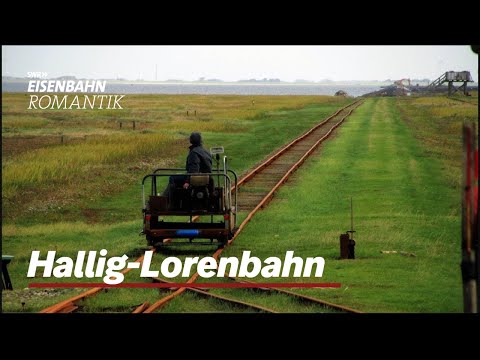
One more, which goes into the Lorenbahn in nice detail.
Didn’t they have a sail powered rail car?
Yes, that shows up later in the 3rd video I posted, at 17:55.
1 Like
I think this place is just remote enough to meet the current requirements for someone to send Cliff Jennings to investigate. 
1 Like
Bill,
This is true!
Cliff Jennings HAS to be related to Peter Jennings somehow as were all in breads on the East Coast of the states anyway.

So they will lay a whole new track system, or run on the hi-speed rail system with the big boy trains?
I have a friend who works for the railways here and his partner is Japanese. His concern is these small railways will disappear and get replaced by roads, as many did after the tidal wave. For now though, many of these Mom & Pop railways survive with neat little gimmicks such as cat station masters and fine dining experiences.
I must say that I thought I would be completely enamoured with the Shinkansen trains, and they do save a lot of time, but for sightseeing they spend a lot of time burrowing through the countryside to keep a straight line to go 300kph. The little quirky local trains are actually quite wonderful.
I visited the SCMaglev Museum in Nagoya (they have a test track elsewhere) and these superfast trains are meeting some political resistance. I understand however that may change considering how advanced China has come in the last 10 years.