Dave, you got me thinking.
Is it a “gearing” reduction? I agree that the rotational speed definitely increases as you get nearer the rail. Like, if the driver is at 10 rpm, the wheels at the rail are really spinning. However, the circumference is also getting proportionally reduced; so circumferential speed is the same at the rail, I think.
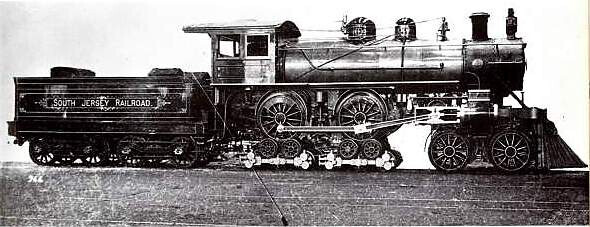
My guess is that their objective was to increase the contact area of wheels to rail, and thereby reduce slippage and increase traction. The lead truck and driver bogies could be sold as a retrofit kit.
I doubt that it worked though… The mass of the loco (to hold a wheel against the rail) went from being divided by 4 drivers, to divided by 12 mini drivers. Each of which had less mass to hold it against the rail. So I’d guess that it didn’t improve anything, but I could be way off base there.
Aside from that, like you say, the additional slippage at each wheel interface surely didn’t help. That, and additional bearing and other mechanical resistance with each axle, must have worsened everything. And there was the little problem of not fitting through tunnels and under bridges & stuff anymore…
Having said all that, it would sure be very cool to see a model of it running!


